
Understanding the Foundations of Personal Injury Law
When a bicycle accident occurs, the legal journey that follows often falls under the umbrella of personal injury law, a branch of civil litigation designed to provide financial recovery for individuals harmed by the negligence or wrongful actions of another party. At its core, personal injury law operates on the principle of tort law, which defines civil wrongs that cause someone to suffer loss or harm, resulting in legal liability for the person who commits the tortious act.
The Core Principles of Personal Injury Law
For a personal injury claim to be successful, several core principles must be established:
- Duty of Care: This refers to the legal obligation that individuals and entities have to act with reasonable care toward others. For example, drivers have a duty to operate their vehicles safely and be aware of cyclists on the road.
- Breach of Duty: A breach occurs when someone fails to uphold their duty of care. This could be a driver texting behind the wheel, a municipality failing to maintain safe road conditions, or a manufacturer producing a defective bicycle part.
- Causation: It must be demonstrated that the breach of duty directly caused the accident and the resulting injuries. In other words, there needs to be a clear link between the negligent act and the harm suffered.
- Measurable Damages: The injured party must have suffered actual, quantifiable harm, known as damages. These can include medical expenses, lost wages, and pain and suffering.
When these elements are proven, the injured party may be entitled to legal remedies, primarily in the form of compensatory damages, which aim to restore them to their pre-accident state as much as possible, financially speaking.
How Negligence is Established in Civil Claims
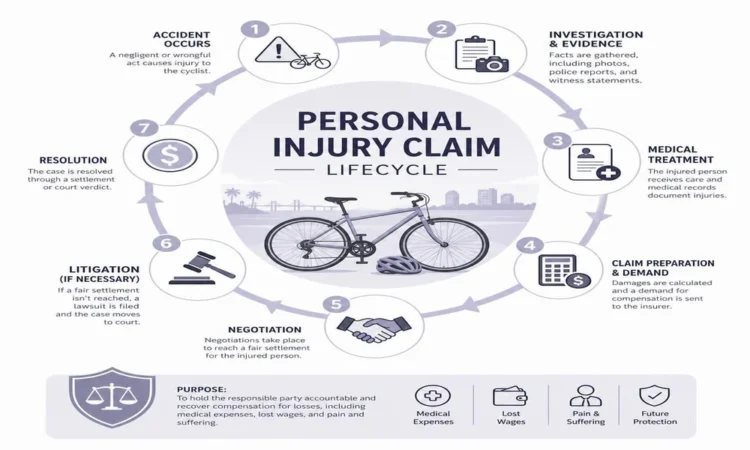
Establishing negligence is often the cornerstone of a bicycle accident claim. It requires a meticulous approach to gather and present compelling evidence. Our approach involves a thorough investigation, which typically includes:
- Evidence Collection: This is a critical first step. We gather all available physical evidence from the accident scene, including photographs and videos of the vehicles, bicycles, road conditions, and any relevant traffic signs or signals. We also secure police reports, which often provide an initial assessment of the accident’s circumstances.
- Eyewitness Testimony: Statements from individuals who witnessed the accident can be invaluable. Their accounts can corroborate the injured cyclist’s version of events and provide an objective perspective on the at-fault party’s actions.
- Medical Records: Comprehensive medical documentation is essential. This includes emergency room reports, diagnostic test results, treatment plans, and prognoses. These records not only prove the extent of the injuries but also help us understand the long-term impact on the victim’s life.
- Expert Reconstruction: In complex cases, we often engage accident reconstruction specialists. These experts can analyze various factors, such as vehicle speeds, impact points, and road conditions, to create a detailed understanding of how the accident unfolded. Their professional insights can be crucial in demonstrating negligence.
By diligently building a robust case based on these principles, we aim to secure the financial recovery our clients deserve. This process is complex, requiring a deep understanding of the law and a commitment to meticulous detail.
Navigating Complex Traffic and Cyclist Claims
Clearwater, with its picturesque coastal roads and popular bike paths like the Pinellas Trail, attracts thousands of cyclists annually. However, this popularity also comes with increased risks. Cyclists are inherently vulnerable road users, lacking the protective shell of a motor vehicle. This vulnerability, coupled with factors like traffic congestion and driver inattention, contributes to a high incidence of bicycle accidents in areas like Pinellas County. In 2023 alone, Pinellas County reported 652 bicycle accidents, with 12 fatalities, underscoring the dangers cyclists face.
Our experience has shown us that many bicycle accidents stem from a combination of driver negligence and challenging road conditions. Whether it’s a bustling intersection collision, a “dooring” incident where a parked car occupant opens a door into a cyclist’s path, or an accident caused by inadequate infrastructure, the consequences for cyclists can be severe. This is why having dedicated legal representation is so crucial for victims. For those seeking specialized legal guidance in the area, Clearwater Board-Certified bicycle lawyers offer an in-depth understanding of both cycling dynamics and Florida’s complex traffic laws.
Common Causes of Two-Wheel Collisions
While cyclists often take precautions, many accidents are unfortunately beyond their control, primarily due to the actions of motor vehicle drivers. Some of the most common causes of two-wheel collisions we encounter include:
- Distracted Driving: Drivers who are texting, talking on the phone, adjusting GPS, or otherwise not paying full attention to the road are a leading cause of accidents. They often fail to see cyclists, leading to devastating impacts.
- Failure to Yield: This is particularly prevalent at intersections, where drivers may turn right on red without checking for approaching cyclists or misjudge the speed and distance of oncoming bicycles when making left turns.
- Driving Under the Influence (DUI): Impaired drivers have reduced reaction times and judgment, making them a significant threat to all road users, especially vulnerable cyclists.
- Aggressive Driving: Speeding, running red lights, tailgating, and road rage are all forms of aggressive driving that put cyclists at extreme risk. Drivers who exhibit impatience or disregard for traffic laws often cause severe accidents.
- Poor Road Infrastructure: While not directly driver negligence, hazardous road conditions like potholes, debris, inadequate signage, or poorly designed bike lanes can force cyclists into dangerous situations, sometimes contributing to accidents. Construction zones without proper safety measures also pose significant risks.
Evaluating Severe Injuries and Long-Term Damages
The impact of a bicycle accident extends far beyond the immediate trauma. Due to the lack of protection, cyclists often sustain severe injuries that can lead to long-term health issues and substantial financial burdens. We frequently see:
- Traumatic Brain Injuries (TBI): Even with helmet use, severe head trauma can occur, leading to cognitive impairments, memory loss, personality changes, and chronic headaches. TBIs can require extensive, lifelong medical care and rehabilitation.
- Spinal Cord Damage: Injuries to the spinal cord can result in partial or complete paralysis, requiring continuous medical support, assistive devices, and significant home modifications.
- Bone Fractures: Broken bones in arms, legs, ribs, and collarbones are common. These often necessitate surgery, casting, and lengthy physical therapy, preventing victims from working or engaging in daily activities.
- Road Rash: Severe abrasions and lacerations from contact with the road surface can lead to painful infections, scarring, and the need for skin grafts.
- Internal Organ Injuries: The force of an impact can cause damage to internal organs, often requiring emergency surgery and intensive care.
Beyond the physical injuries, victims face mounting medical bills, lost wages due to time off work, and significant pain and suffering. Our role is to meticulously document all these damages, including future medical needs, loss of earning capacity, and the profound impact on quality of life, to ensure our clients receive comprehensive compensation.

Insurance Tactics and the Valuation of Claims
Following a bicycle accident, dealing with insurance companies can be one of the most challenging aspects for victims. Insurance adjusters are trained to protect their company’s bottom line, which often means minimizing payouts. They will scrutinize every detail of your claim, from the circumstances of the accident to the severity of your injuries. Understanding how they operate and the types of insurance involved is crucial.
In Florida, Personal Injury Protection (PIP) coverage is often the first line of defense for medical expenses and lost wages, even for cyclists, if they have it on their own auto policy or live with someone who does. However, PIP only covers a limited amount (typically $10,000) and doesn’t cover pain and suffering. Uninsured Motorist (UM) coverage is also vital, especially given that over 40% of Florida drivers are uninsured. UM coverage protects you if you’re hit by an uninsured or underinsured driver, even when you’re on your bicycle.
Common Adjuster Strategies to Minimize Payouts
Insurance adjusters employ various tactics designed to reduce the value of a claim or deny it altogether. Victims should be aware of these strategies:
- Quick Lowball Offers: Adjusters may contact you very soon after the accident, offering a fast settlement. These offers are almost always significantly less than the true value of your claim, especially before the full extent of your injuries and long-term prognosis are known.
- Recorded Statements: They might ask you to provide a recorded statement, often under the guise of “just needing to understand what happened.” However, anything you say can be used against you to dispute liability or minimize your injuries. It’s always best to consult with an attorney before giving any statements.
- Disputing Medical Severity: Adjusters may argue that your injuries are not as severe as claimed, suggesting that you don’t need extensive treatment or that you are exaggerating your pain.
- Pre-Existing Conditions: They might try to attribute your current injuries to a pre-existing condition, even if the accident exacerbated it. This is a common tactic to reduce their liability.
- Shifting Blame: Adjusters will often try to place some or all of the blame for the accident on the cyclist, leveraging Florida’s comparative fault laws to reduce the amount they have to pay.
Proving Non-Economic Damages in Personal Injury Law
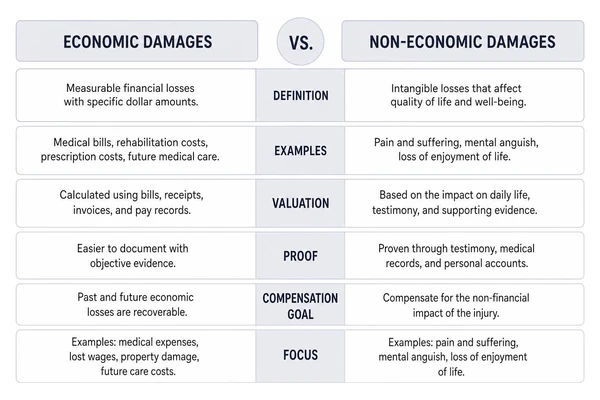
While economic damages like medical bills and lost wages are relatively straightforward to calculate, non-economic damages are more subjective but equally important. These include:
- Pain and Suffering: This encompasses the physical pain and emotional distress experienced as a result of the accident and injuries.
- Mental Anguish: This refers to the psychological impact, such as anxiety, depression, fear, or PTSD, that can arise from a traumatic accident.
- Loss of Enjoyment of Life: This accounts for the inability to participate in activities, hobbies, or daily routines that brought joy and meaning to the victim’s life before the accident.
Proving non-economic damages often relies on compelling witness testimony from the victim themselves, family members, and medical professionals who can speak to the profound impact of the injuries. Keeping a detailed journal of your recovery, pain levels, and emotional state can also be valuable.
Here’s a comparison of economic and non-economic damages:
Florida Legal Statutes and Comparative Fault
Florida’s legal landscape for personal injury claims, particularly those involving bicycle accidents, is governed by specific statutes that significantly impact how cases proceed. Understanding these laws is paramount for anyone seeking compensation.
One of the most critical aspects of Florida law that affects bicycle accident claims is the concept of modified comparative fault. Historically, Florida operated under a pure comparative negligence system, meaning an injured party could recover damages even if they were 99% at fault, though their compensation would be reduced by their percentage of fault. However, effective March 24, 2023, Florida shifted to a modified comparative fault system with a 50 percent bar rule. This means that if an injured party is found to be 51% or more at fault for the accident, they are completely barred from recovering any damages. If they are 50% or less at fault, their compensation will be reduced proportionally to their degree of fault.
Another crucial legal aspect is the statute of limitations, which sets strict legal deadlines for filing a lawsuit. Missing this deadline almost certainly means losing your right to pursue compensation, regardless of the merits of your case.
The Impact of Modified Comparative Negligence
The change to modified comparative negligence has a profound impact on bicycle accident claims. Insurance companies and defense attorneys will aggressively seek to assign a percentage of fault to the cyclist to reduce or eliminate their liability.
- Allocated Blame: For example, if a cyclist is found to be 20% at fault for an accident (perhaps for not having proper lights at dusk), and their total damages are $100,000, their recoverable compensation would be reduced by 20% to $80,000. If they are found to be 51% at fault, they would receive nothing.
- Contributory Negligence Arguments: Common arguments used to shift blame to cyclists include claims that the cyclist was not visible, failed to obey traffic laws (e.g., running a stop sign), or was distracted.
- Helmet Defense: While Florida law does not mandate helmet use for adult cyclists (16 years or older), an insurance company might argue that not wearing a helmet contributed to the severity of a head injury. This can be used as a form of “mitigation of damages” argument, potentially reducing the compensation for head injuries, even if it doesn’t bar the claim entirely.
Navigating these arguments requires experienced legal counsel who can effectively counter attempts to unfairly assign blame and protect the cyclist’s right to compensation.
Critical Timelines for Filing a Lawsuit
The statute of limitations is a strict deadline for initiating legal action. For most personal injury lawsuits arising from bicycle accidents in Florida, the deadline is now two years from the date of the accident. This applies to accidents occurring on or after March 24, 2023. For accidents that occurred before this date, the previous four-year statute of limitations generally applies.
- Two-Year Deadline: This means that if you were injured in a bicycle accident in Clearwater in July 2026, you would have until July 2028 to file a personal injury lawsuit.
- Wrongful Death Claims: If a bicycle accident results in a fatality, the statute of limitations for filing a wrongful death claim is also typically two years from the date of death.
- Legal Preservation: It’s crucial to consult with an attorney as soon as possible after an accident. This allows ample time for thorough investigation, evidence gathering, and proper preparation for a civil trial, if necessary, ensuring that all legal deadlines are met and your rights are preserved. Delaying action can jeopardize your ability to seek justice and compensation.

Frequently Asked Questions about Personal Injury Claims
We understand that the aftermath of a bicycle accident can be overwhelming, leaving victims with many questions about their legal options. Here, we address some of the most common inquiries we receive.
What is the statute of limitations for a bicycle accident in Florida?
For bicycle accidents occurring on or after March 24, 2023, the statute of limitations for filing a personal injury lawsuit in Florida is two years from the date of the accident. This means you have a limited window to initiate legal proceedings. If you miss this deadline, your claim will likely be barred, regardless of its merits. It is crucial to contact a legal professional promptly to ensure your rights are protected and your claim doesn’t expire.
Can I recover damages if I was not wearing a helmet?
Florida law does not mandate helmet use for cyclists aged 16 or older. Therefore, not wearing a helmet does not automatically prevent you from recovering damages after a bicycle accident. However, under Florida’s modified comparative fault system, the defense may argue that your failure to wear a helmet contributed to the severity of your head injuries. If this argument is successful, your compensation for those specific injuries could be reduced based on the percentage of fault attributed to not wearing a helmet. An experienced attorney can help navigate this complex issue and protect your claim.
How is the value of a personal injury claim determined?
The value of a bicycle accident claim is not based on a simple formula; it’s a comprehensive assessment influenced by numerous factors. We meticulously evaluate all aspects of your case to determine a fair and just settlement or award. Key factors include:
- Medical Expenses: This covers all past and future medical costs, including emergency care, hospital stays, surgeries, medications, rehabilitation, and long-term care needs.
- Lost Earning Capacity: We calculate lost wages from time missed at work due to injuries and any future loss of income or earning potential if your injuries result in a permanent disability or inability to perform your previous job.
- Pain and Suffering: This accounts for the physical pain, emotional distress, mental anguish, and loss of enjoyment of life caused by the accident and injuries.
- Property Damage: This includes the cost of repairing or replacing your damaged bicycle and any other personal property.
- Insurance Policy Limits: The available insurance coverage of the at-fault driver and your own Uninsured/Underinsured Motorist (UM) coverage will also play a significant role in the recoverable amount.
The full value of a claim often cannot be determined until medical treatment is complete and a clear prognosis is established.
Conclusion
Cycling offers a unique blend of health, recreation, and eco-friendly transportation, but the dangers on Florida’s roads are undeniable. When a bicycle accident turns a pleasant ride into a traumatic event, the path to recovery can be fraught with medical challenges, financial burdens, and complex legal hurdles.
Navigating the intricacies of personal injury law, understanding Florida’s specific statutes, and countering the tactics of insurance companies requires specialized knowledge and dedicated advocacy. Our commitment is to provide comprehensive recovery support and professional advocacy, ensuring that injured cyclists in Clearwater receive the justice and compensation they are entitled to. We believe that no one should face this challenging situation alone. By seeking experienced legal recourse, victims can focus on their healing while we work tirelessly to secure their future.